
Wear and Abuse
All wire ropes should be thorougly inspected at regular intervals. The longer it has been in service or the more severe the service, the more thoroughly and frequently it should be inspected. Be sure to maintain records of each inspection.
Inspections should be carried out by a person who has learned through special training or practical experience what to look for and who knows how to judge the importance of any abnormal conditions they may discover. It is the inspector’s responsibility to obtain and follow the proper inspection criteria for each application inspected.

Tension Break
Wire break shows one end of broken wire coned, the other cupped. Necking down of the broken ends is typical of this type break. Where tension breaks are found, the rope has been subjected to overloading, either for its original strength (new rope) or for its remaining strength in the case of a used rope. Tension breaks frequently are caused by the sudden application of a load to a slack rope, thereby setting up incalculable impact stress.

Fatigue Break
Wire breaks are usually transverse or square showing granular structure. Often these breaks will develop a shattered or jagged fracture, depending on the type of operation. Where fatigue breaks occur, the rope has repeatedly been bent around too small a radius. Whipping, vibration, slapping, and torsional stresses will also cause fatigue. Fatigue breaks are accelerated by abrasion and nicking.

Abrasion Break
Wire break shows broken ends worn to a knife-edge thinness. Abrasive wear obviously is concentrated at points, where the rope contacts an abrasive medium, such as the grooves of sheaves and drums, or other objects with which the rope comes into contact. Unwarranted abrasive wear indicates improperly grooved sheaves and drums, incorrect fleet angle, or other localized abrasive condition.

Corrosion Break
Easily noted by the wire’s pitted surface, wire breaks usually show evidence of tension, abrasion, and/or fatigue. Corrosion usually indicates improper lubrication. The extent of the damage to the interior of the rope is extremely difficult to determine; consequently corrosion is one of the most dangerous causes of rope deterioration.

Cut or Shear
Wire will be pinched down and cut at broken ends or will show evidence of shear-like cut. This condition is evidence of mechanical abuse caused by agents outside the installation, or by something abnormal on the installation itself, such as a broken flange.
ABRASION

- Frozen sheaves or rollers
- Tight grooves
- Excessive fleet angle
- Oversized or undersized rope
- Corrugated sheave or drum
- Sheave overspin
- Rope jumping the sheave
- Poor spooling
- Misaligned sheaves
- Site contaminants
CORE PROTRUSION AND SLIPPAGE
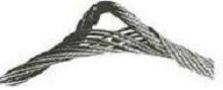
- Shockloading
- Poor seizing techniques
- Poor installation techniques
CORROSION

- Lack of lubrication
- Environmental damage, e.g., acidic
- Fume exposure
- Improper storage
CRUSHING

- Poor installation techniques
- Crosswinding
- Poor spooling
- Incorrect wire rope construction
- Poor break-in procedure
- Excessive fleet angle
- Excessive rope length
DIAMETER REDUCTION
- Lack of lubrication (fiber core)
- Excessive abrasion
- Corrosion, internal, and/or external
- Inner wire or core failure
FATIGUE
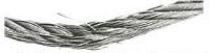

- Out of round sheaves
- Tight grooves
- Misaligned sheaves
- Undersized sheaves
- Worn bearings
- Vibration
- Slapping
- Whipping
- Reverse bends
HIGH STRANDING
- Poor seizing techniques
- Tight grooves
- Undersized sheaves
- Poor installation techniques
CRUSHING
- Poor spooling
- Excessive rope length
- Broken flange
KINKING
- Poor unreeling procedures
- Poor installation techniques
- Undersized sheaves
LAY LENGTHENING & TIGHTENING
- Poor installation techniques
- Poor unreeling procedures
- Corrosion
- Core failure
LOOPED WIRES
- Poor installation techniques
- Undersized sheaves
UNBALANCED ROPE
- Oversized sheaves
